

Reflecting on my journey as the youngest sustainability manager in one of the leading beverage companies in Vietnam, I never expected to play solo in the middle of a cacophony, but I did, time and again.

While the utopian organizational systems fully operating with sustainability practices may truly exist elsewhere, the reality I faced presented a classic dilemma: if I pushed too hard, I risked being sidelined as impractical or idealistic; yet if I play loose, the company would continue celebrating commercial achievements as always without any ecological consideration.
To be honest, there exists a unique fortune in leading sustainability within such challenging environments. Low levels of domain knowledge maturity. Constant resistance from business-as-usual perspectives. Hinder political gameplay in the workplace dynamics. To not only survive in the corporate sustainability battle but also win as a sustainability champion, you must steel yourself to defend your small voice when bringing the proposal of collective efforts across functions to the table.
My below “defensive triangle” may benefit those who need a little bit of courage to step up and protect our green notes in front of business decision-makers.
Part 1:
Horizontal foundation: Build your own cross-functional alliance network asap
Case Study: Defending absolute emission reduction targets
Disclaimer: This is a hypothetical example created for illustrative purposes only and does not relate to any real-world business. Any similarities to actual organizations or situations are coincidental.

Background: Your organization has publicly committed to a 50% reduction in greenhouse gas emissions by 2030 but hasn't disclosed specific measurement protocols. Executives want to use intensity-based metrics (emissions per production unit/per employee/per revenue/per kilowatt-hour of energy) rather than absolute emission (total quantity of emissions released, typically expressed in metric tons of CO2 equivalent).
As a sustainability leader, you must defend absolute emission targets as the ultimate goal, while keeping intensity metrics optional for efficiency improvements, ensuring transparent disclosure in the next annual report.
Note: To better understand absolute vs. intensity metrics, kindly read more at this link. In short, intensity-based targets don't guarantee absolute emissions reductions. If a company's emissions intensity decreases but production volume increases at a greater rate, total GHG emissions may still increase.
Before entering the boardroom, have you visualized the scene that awaits you like this?
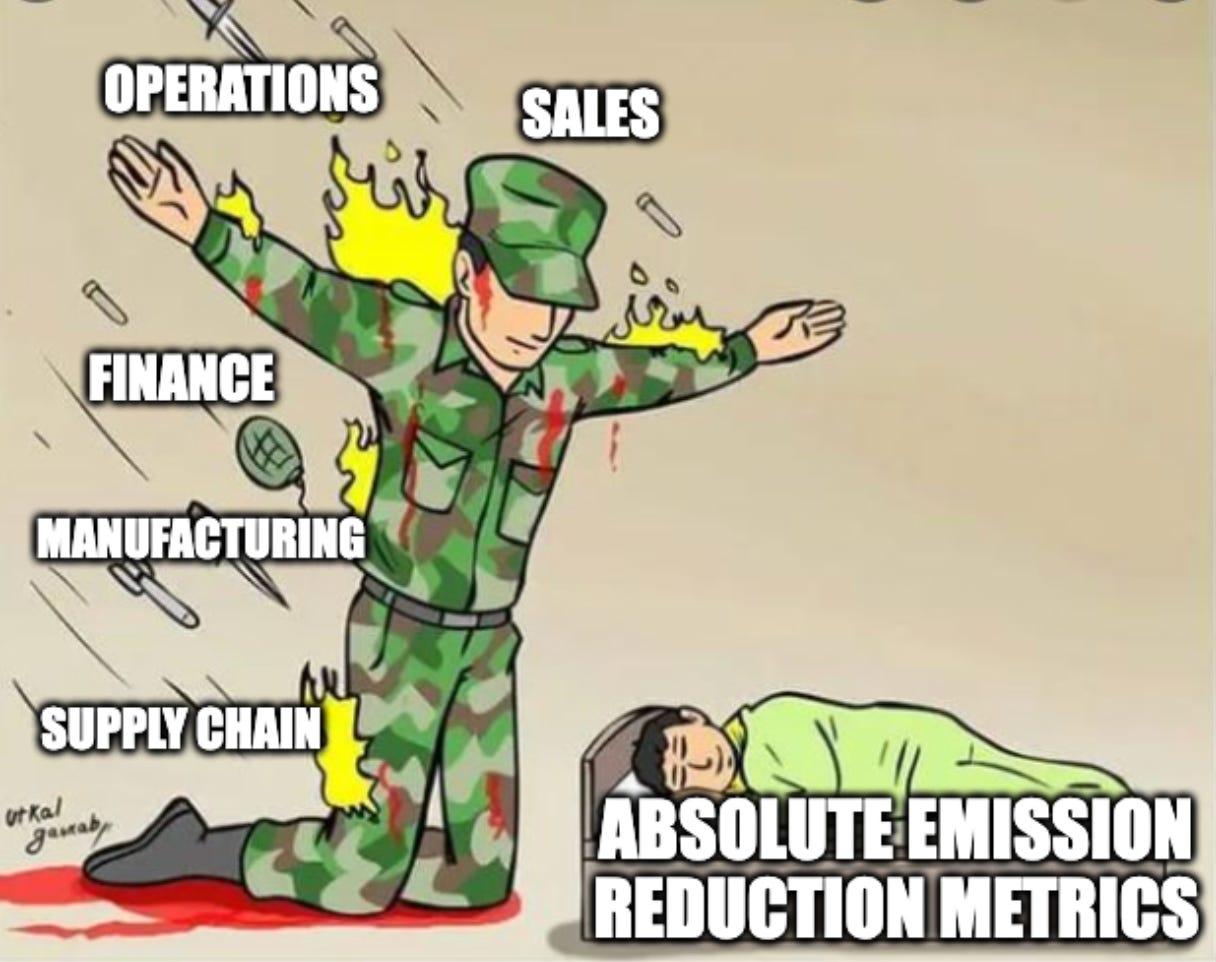
Because, the moment your opening slide appears showing greenhouse gas emission target commitments, the executives already had their fixed assumption in their mind:
You (Sustainability Manager):
*Talking about environmental integrity, global climate best practices requiring actual emission decreases, stakeholders expectations and industry benchmarking analysis on absolute reduction, reputational risk concerns and potential accusations of greenwashing if shifting to intensity metrics, future-proofing against tightening regulation on disclosures, action plan to achieve 50% absolute emission reductions…
CEO (Chief Executive Office):
“Intensity targets provide ambitious goals without constraining our strategic flexibility for growth.”
CFO (Chief Financial Officer):
“Intensity metrics better align with our financial performance indicators of efficiency and return on investment. If absolute metrics require costly capital expenditures, please show guaranteed returns even if business growth exceeds projections.”
CSO (Chief Sales Officer):
“Intensity metrics better reflect our reality as an emerging market player. They incentivize innovation while allowing us to pursue market expansion opportunities.”
CHRO (Chief Human Resources Officer):
*Remain silent, not seeing their role in this discussion.
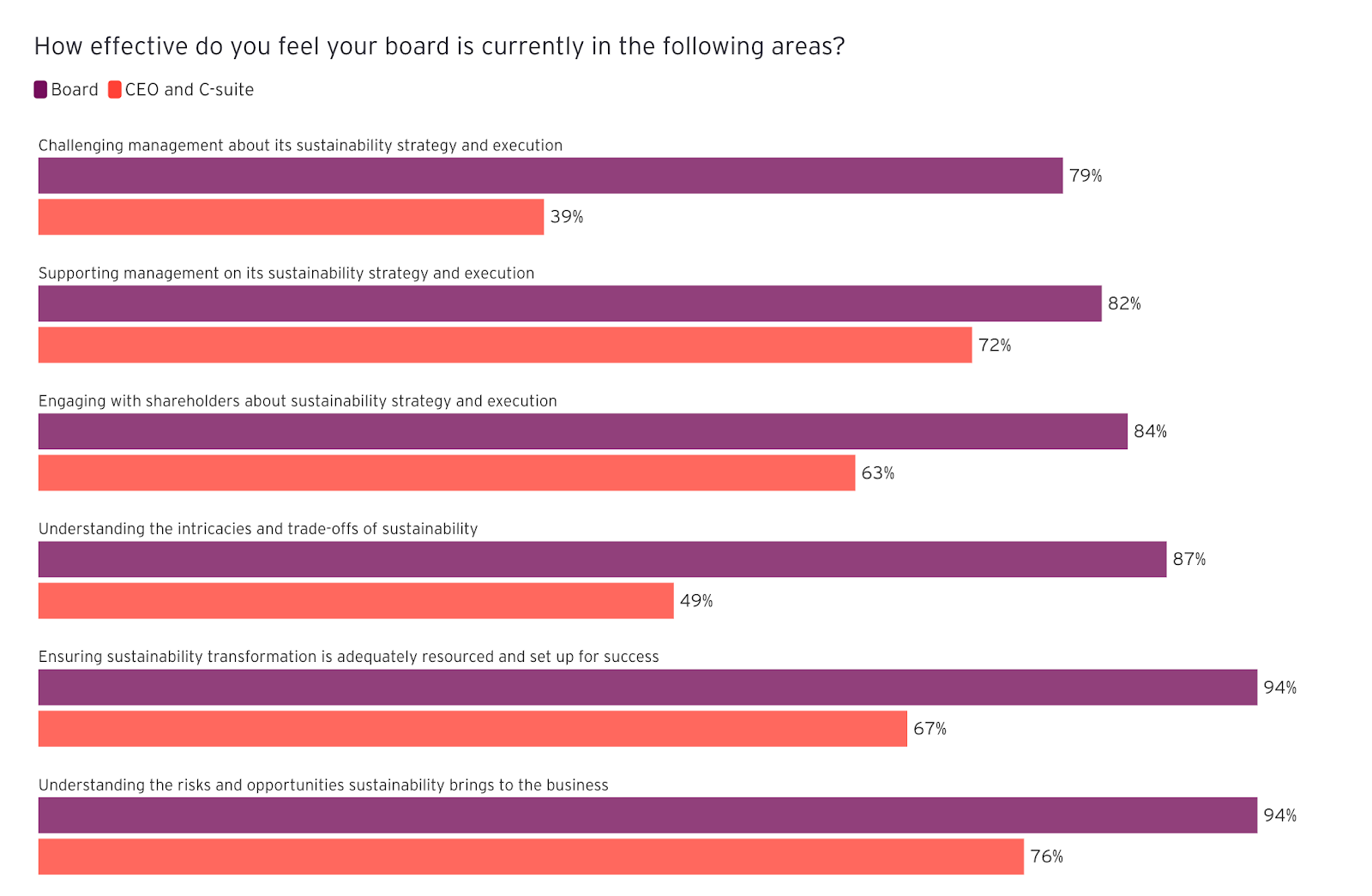
But when it comes to boards, the differences are even more surprising. According to the EY Long-Term Value and Corporate Governance survey of 200 of Europe’s most senior business leaders in January 2025, boards and senior management teams think about sustainability very differently. This could be one reason why sustainability is tackled separately within the broader business. This fundamental misalignment often explains why sustainability remains isolated from core business strategy, creating the very boardroom battles we’ve just witnessed.
But that still represents the best-case scenario, where you at least have room to highlight environmental values into the board discussion and receive C-levels feedback. In many organizations, sustainability topics never reach business forums because leaders don't perceive climate commitments as material to their business, prioritize more “urgent” matters, assume greenhouse gas reduction commitments are just voluntary with no penalties for misleading claims, or simply assume they can adjust objectives closer to the deadlines when pressure comes.
Flipping the script:
Instead of walking into that boardroom as a standalone function, consider building your cross-functional alliance network before the meeting ever happens.

When we say "we should pursue absolute emissions,” the first question is: who exactly is "we"?
Map your company's emission footprint, conduct life cycle assessment, identify stakeholder roles, understand each function's goals and pain points, decode your organization's cultural dynamics, do your homework of connecting every dot between your desired outcome of alignment and the business rationale that makes it inevitable.
Cross-functional collaboration isn't naturally harmonious. Functions often compete due to conflicting priorities and hidden agendas. Your role becomes understanding how to influence peers without direct authority, building consensus through shared interests rather than top-down assignment.
For this emissions example, I would analyze potential allies across two critical dimensions:
Impact creators: functions whose operations directly drive emissions, and
Competency enablers: departments with the capability and accountability to implement governance solutions.
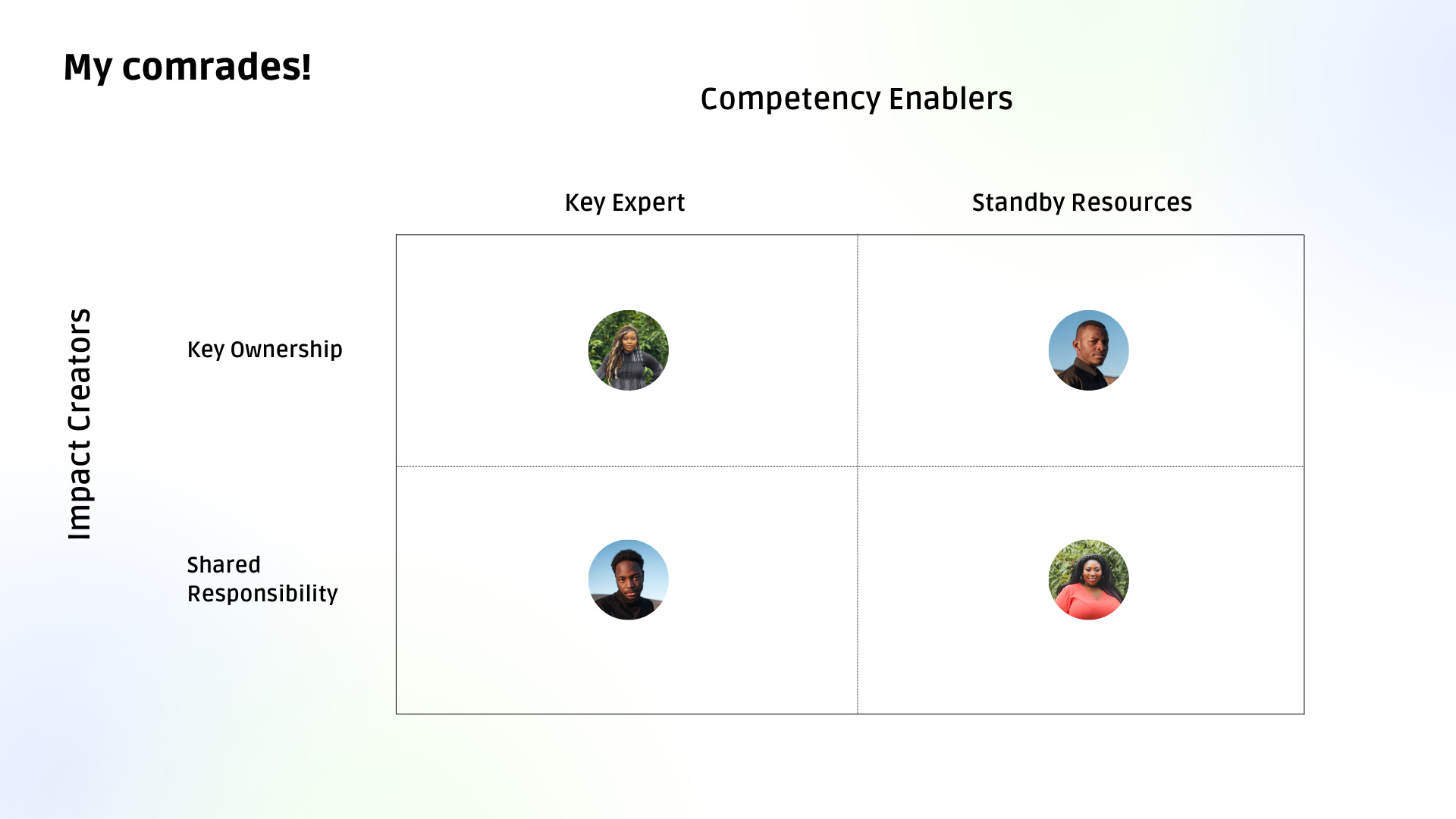
Impact creators bear obvious responsibility.
Manufacturing operations that run emission-heavy facilities. Sales teams whose aggressive targets drive production volumes. Supply chain functions managing transportation and its expanding scale. When their activities directly correlate with emission increases, they cannot reasonably argue against accountability for reductions.
The complexity emerges when determining primary accountability among impact creators. Does responsibility lie with manufacturing for operating emission-intensive facilities, or with sales for creating the demand that drives production? Your analysis must focus on the most tangible, measurable impacts, such as facility ownership, direct material usage, rather than getting lost in the political gameplay of causation arguments.
Competency enablers possess the expertise and organizational mandate to champion proper governance.
Communications teams tracking competitor disclosures understand reputational risks of greenwashing accusations. Legal and finance departments monitoring regulatory developments recognize the future-proofing value of absolute metrics against tightening carbon regulations. These functions naturally become your proposal's defenders because environmental integrity aligns with their professional responsibilities.
Your expert allies often become your strongest advocates, both from their technical knowledge and their direct C-suite reporting lines. Communications teams who represent the company at industry forums cannot afford to defend weak intensity metrics when the whole world accused intensity metrics as greenwashing. Legal and finance departments who track domestic and regional policy developments recognize that absolute emission tracking creates verifiable evidence for future carbon compliance requirements, transforming potential future costs into present competitive advantages.

Multiple departments benefit from absolute emissions frameworks, primarily driven by external pressures, including government policies, market expectations, industry standards, investor requirements, rather than internal enthusiasm. Your role becomes closing their knowledge gaps early, helping them understand how sustainability connects to their functional success. When alignment meetings occur, C-suite leaders arrive already educated rather than blindsided.
You need to transform their blind spots into strategic visibility, bridging the gap between their short-term tactical decisions and the long-term, systemic dynamics that will ultimately determine business viability.
During the whole process, try to make a cultural change to your organization. Sustainability topics require a fundamentally different approach from conventional business norms. While functional boundaries are needed for operational clarity, they should become welcoming for cross-functional collaboration. When departments possess expertise in sustainability and implementation pathways, they need to step forward boldly and challenge traditional practices, regardless of whether it falls within their traditional scope.
Stay tuned, I'm writing the part 2 and 3!
Part 2: You can't choose your manager, but you can choose your manager
Part 3. Starting small to win big